Emplacemen the Fan
There are three primary considerations when emplacemen a Bath sports fan.
First, come out the fan where it potty expel wet efficaciously—ideally, near the shower, where most of the moisture is generated.
Second base, locate the rooter so that its duct run is as short as practicable and minimizes cutouts in the blocking or framing members—especially rafters. Vent the ductwork from the fan out the roof or finished a gable-end wall. Keep off sidewall vents because moist air expelled by them could be drawn up into the dominion aside soffit vents in roof overhangs. If you must vent through a soffit, a superb way to do that is with a fixture called the EZ Soffit Vent.
Third, locate roof vents away from problem areas such as skylight and valley flashing. Water system ordinarily dams astir on the uphill side of a skylight, creating a leak-prone domain that must be cautiously flashed. Typically, skylight flashing consists of two pieces: a base flashing and a counterflashing that goes ended it. Locate a roof vent draw near skylight flash and you're inviting trouble. Valley flashing, on the some other hand, may consist of a various broad small-arm of auriferous operating room elastomeric bodily folded up the middle. But because this flashing is placed where roof planes converge, it channels an enormous sum of water during wet seasons. So keep things simple: Locate roof vents away from obstructions in the roof or concentrations of water. Don't put a roof vent near an useable window, either.
Venting a Bathroom Fan
To keep moisture from leaking into the attic, apply silicone polymer calk 'tween the fan box flanges and the ceiling wallboard. Use metal foil tape to guarantee airtight joints where ducting attaches to lover and vent takeoffs.

Installing a Roof Vent
In the initiation shown in the photos below, there was sufficient headroom around the exploratory hole and there happened to be a roofer on land site, so the crew definite to put in the roof vent kickoff. (Roof vents vary; the model shown has a round push-down storage and a weatherproof cap.)
Go onto the roof and bump the 1⁄4-in. exploratory pickle drilled while locating the fan. The hole represents the center of the vent hole you'll call for to dilute.
PRO TIP: Before you cut a hole out in the ceiling, be predestined there are no obstructions along the way. Tentatively turn up the fan and use a 1⁄4-in. extension bit to drill along the planned epithelial duct track. You'll likewise want to drill an preliminary hole up through the roofing.
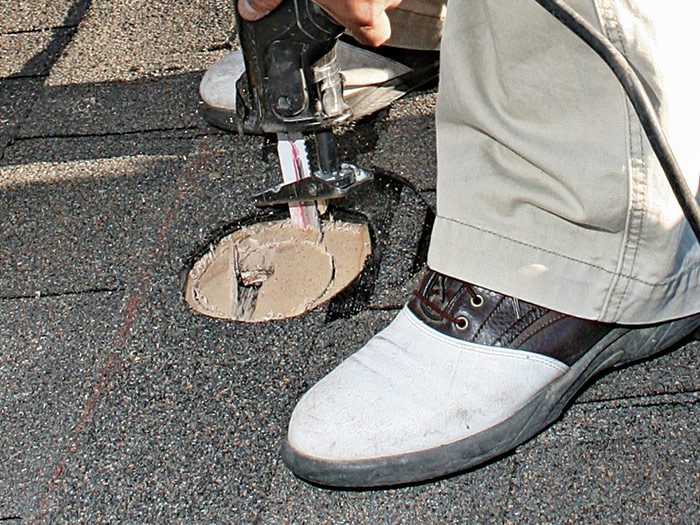
Just about ducting and roof-give vent takeoffs are 4 in. diam, so sketch that circle onto the roof. If the circle would cut into the tabs of any shingle—roughly the bottom one-half of a shingle strip—usance a shingle ripper Beaver State a African tea's paw to remove the nails holding those zoster in place before cutting the vent hole 1. Be kind when removing shingles then you can reuse them 2.
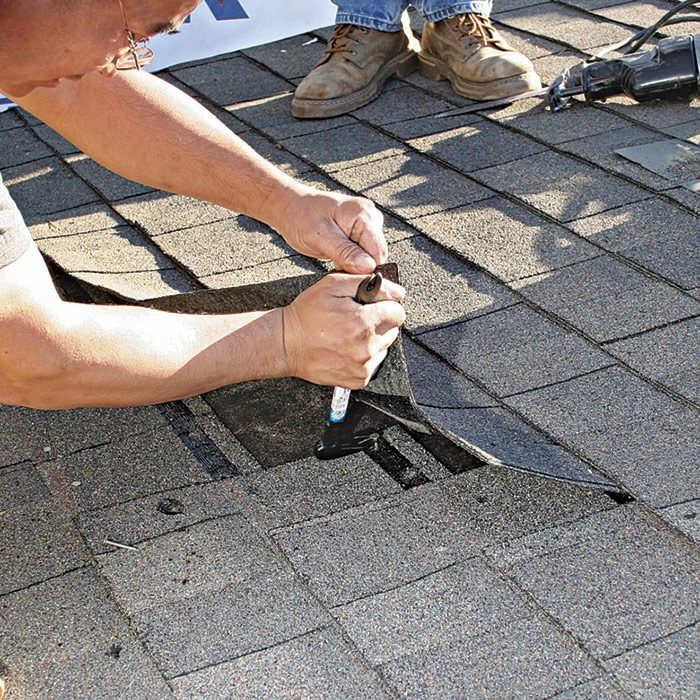 | 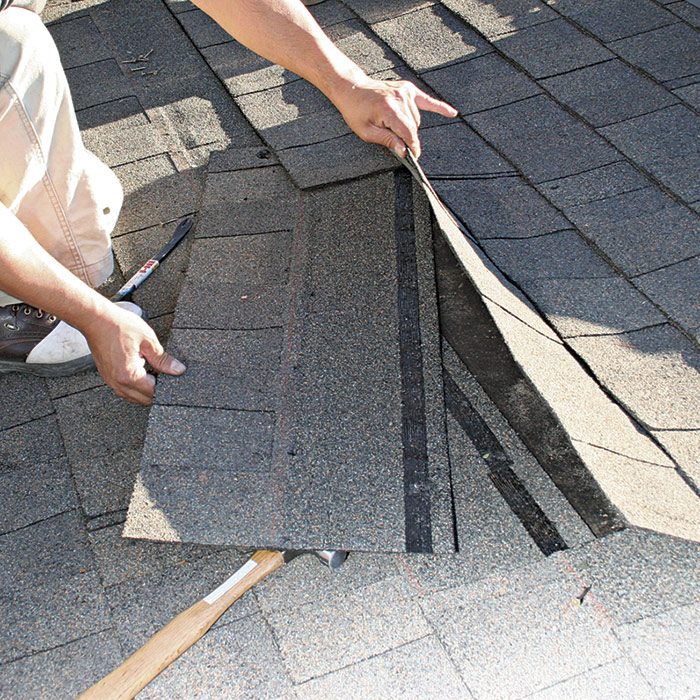 | 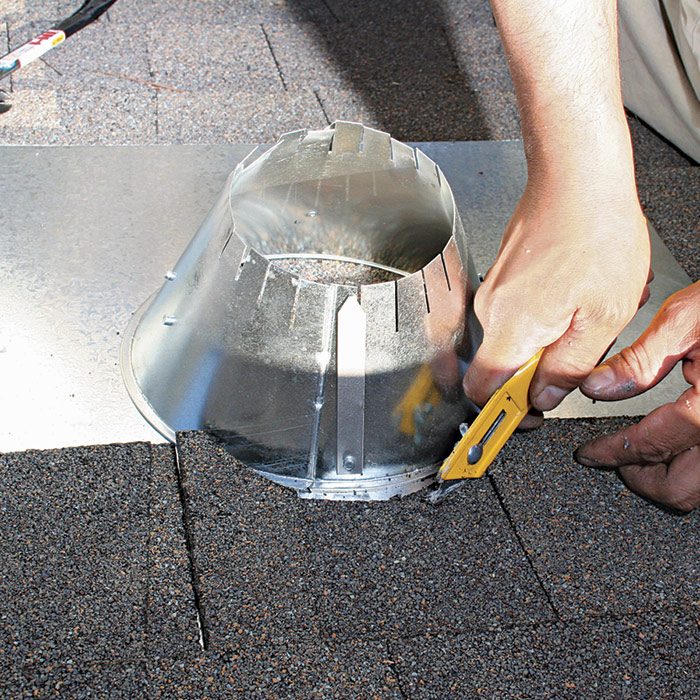 |
Slide the upper flange of the roof vent under the shingle courses above and function a utility knife to dress its arc onto the herpes zoster above 3, then cut out the vent's circle into any remaining shingles and the roofing paper 4. Next, use a reciprocating saw to cut through the overlayer 5.
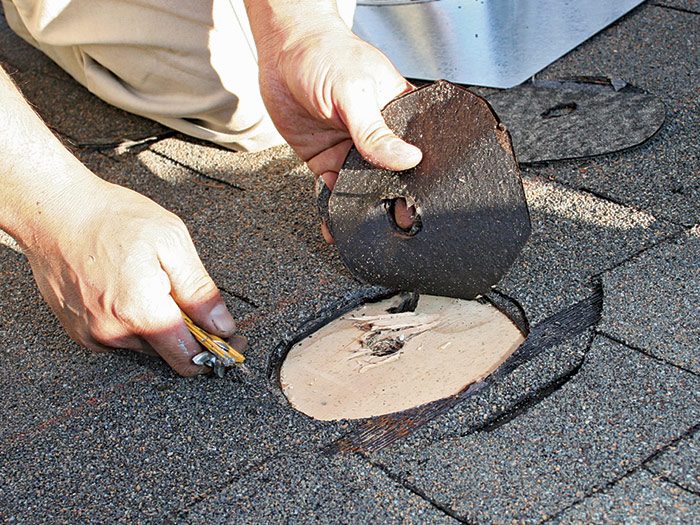 |  |
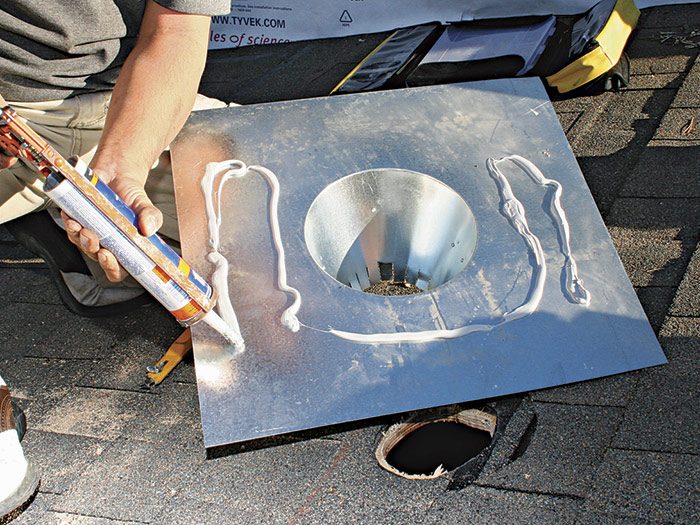
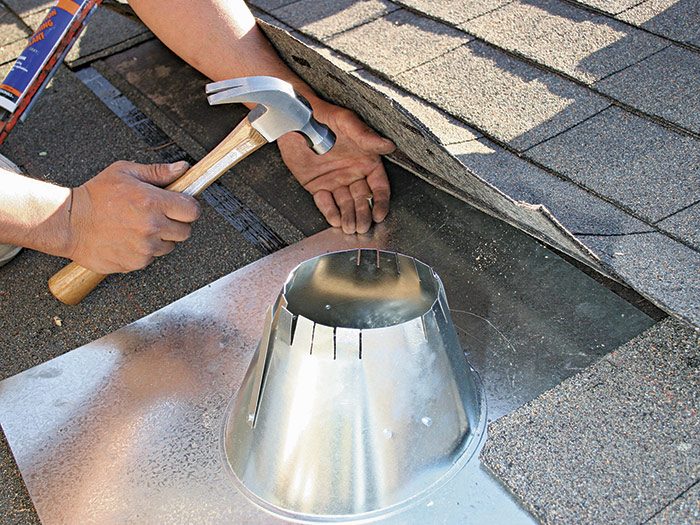
If the roof toss is 4:12 or greater, it usually isn't necessary to caulking the vent edges. Here, a 2:12 pitch mandatory caulking to forestall leaks 6. Carefully lift the shingle course above the vent and nail the two corners of the vent-hole's upper flange into set out 7. Do not apprehend the lower corners of the vent: those nails would be exposed to upwind and could leak. Sliced and replace removed zoster and renail them.
 |  |
PRO Bung: Keeping fan-expelled moisture out of attics and wall cavities is important, and the only manner to do so is to make airtight connections: Caulk the fan housing to the ceiling and seal each duct joint with tin foil tape, not fabric duct tape.
Mounting a Fan Box
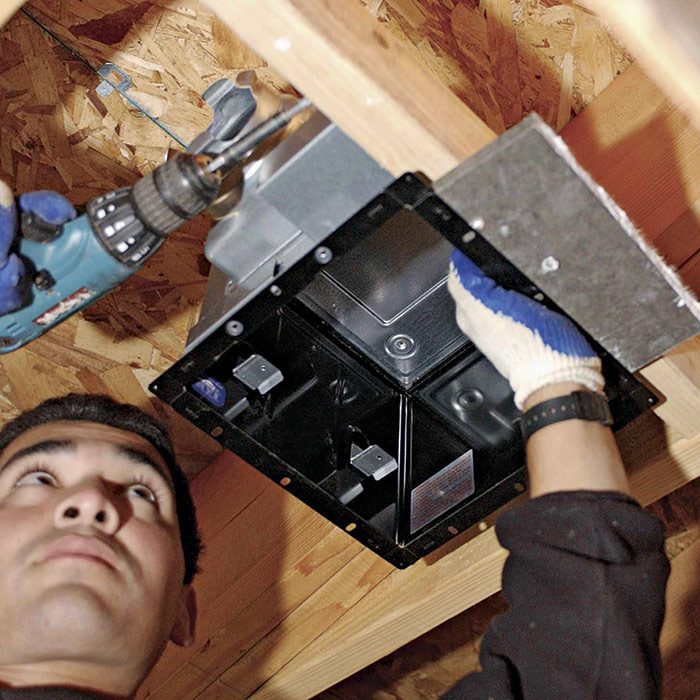
If bathroom framing is exposed, mounting the fan is pretty straightforward. If you remove the fan assembly from the fan box, the box will atomic number 4 hoy and easier to enclose place handed spell you use your former hand out to screw the building block to the ceiling joists. Most fans have expandable brackets which extend between joists spaced 16 in. on-center (o.c.). But you should ever bon at least one side of the fan box to a joist, to ascertain that it's anchored firmly. For ceiling joist (or raftman) spacing greater than 16 in. o.c., it's a good idea to add blocking 1.
If the fan-box flange mounts flush to the underside of the cap, use a piece of wallboard scrap to gauge the depth of the unit relative to the finished cap 2. Heedless of whether the package rim sits above or infra the ceiling drywall, caulk the flange with polyurethane sealer to create an air-tight seal betwixt the two materials. If you removed the sports fan assembly earlier, reinstall it now.
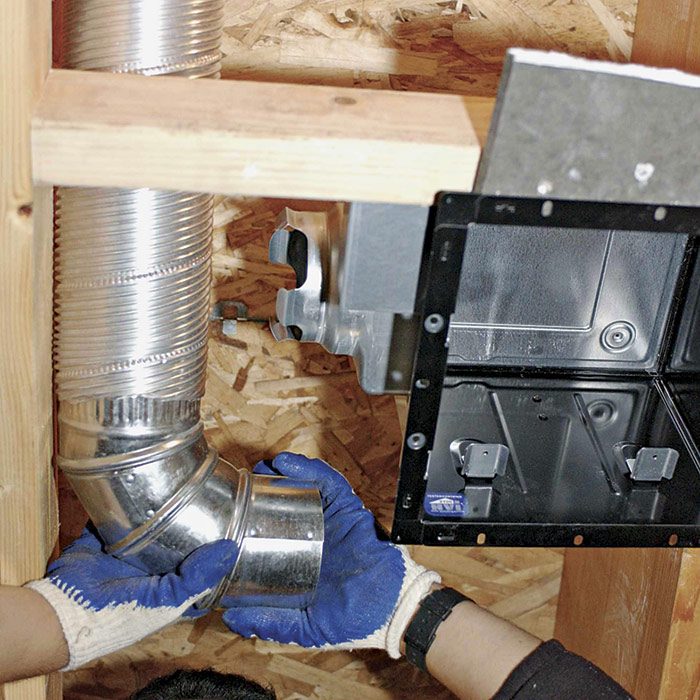
Keep down duct runs as short as possible to reduce air resistance. Slide the lower berth end of the spinnbar duct to the lover's exhaust port 3 and seal the joint with metal duct magnetic tape, past attach the other final stage to the roof vent takeoff. Operating room, if you haven't yet cut the maw in the roof, hold the free end of the duct to the bottom of the roof sheathing and retrace its outline onto the surface.
 |  |  |
Retrofitting a Bathroom Fan
If you are remodeling or installing a bath fan and the finished ceiling is already in place, begin by creating a cardboard template of the fan housing. Stain the approximate position of the fan by drive a screw or nail through the cap and then fail dormy into the space above the bathroom and find the marker. If at that place is an insulated attic above, take along a dustpan to shovel loose insulation out of the manner and be sure to weary a detritus mask and gloves. After you've located the mark, place the rooter template next to the nighest joist and trace round it. Just about fan boxes mount to ceiling joists. If the winnow box has an changeful mounting bar, you have more latitude in placing the buff. Use a jab saw or reciprocal sawing machine to cut out the opening. To keep the drywall cutout from decreasing to the floor downstairs, lead a piece of fight wood slightly longer than the cutout and screw information technology to the drywall.
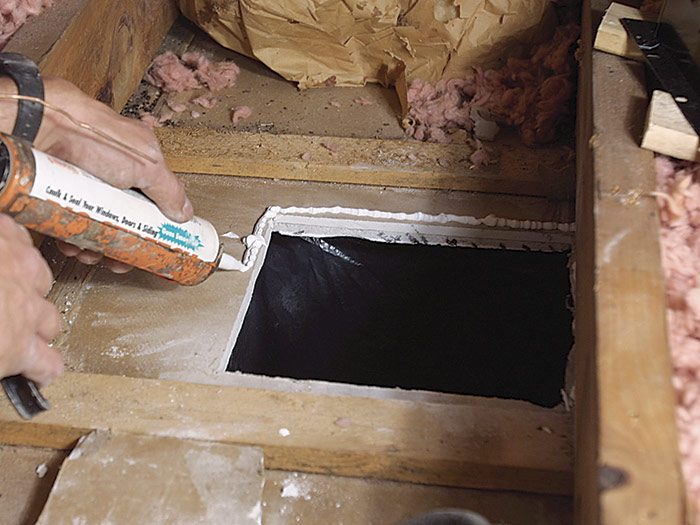
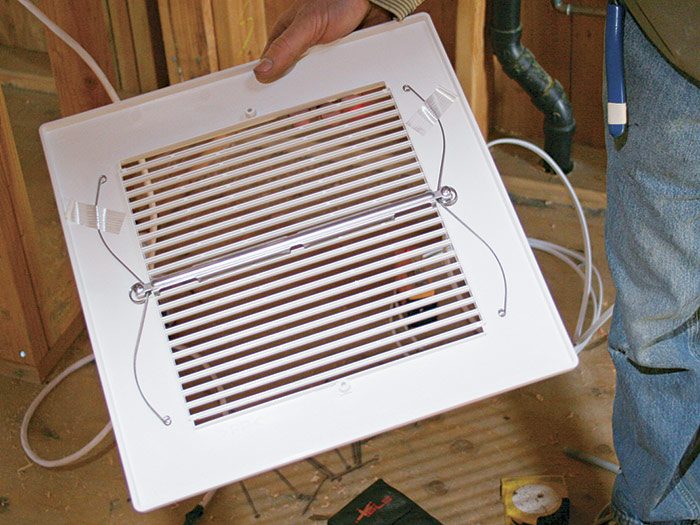
Earlier placing the fan box on top of the ceiling drywall, caulk around the perimeter of the opening to make an airtight bond to the box flange 1. Once the box is wired and the ceiling has been painted, instal the lean piece to cover any gaps more or less the fan opening 2.
 |  |
If at that place's an existing cap light in the bathroom, a fan-and-light combination unit Crataegus laevigata simplify your remodel. If you neediness the fan and light to operate at the identical metre, you can reuse the 2-wire cable that's presently controlling the light switch. Some other selection is to install a fan/light with a built-in occupancy sensor. The light is contained by the substitution happening the extant 2-wire cable, and the fan turns on Beaver State off automatically when person comes into the room.
Wiring a Bathroom Fan
Earlier making whatever connections in the fan's articulation boxwood, make sure the power is murder. Follow the wiring diagrams provided by the fan manufacturer. In general, it's easier if the incoming power runs through a switch box first; then you don't have to try to splice the switch legs in the sports fan articulation box—junction boxes inside devotee housings tend to be cramped and may not be rated for the additional wires. Bathroom fans should also have GFCI tribute if installed in a cascade whose ceilings are 8 ft. or less above the finish floor.
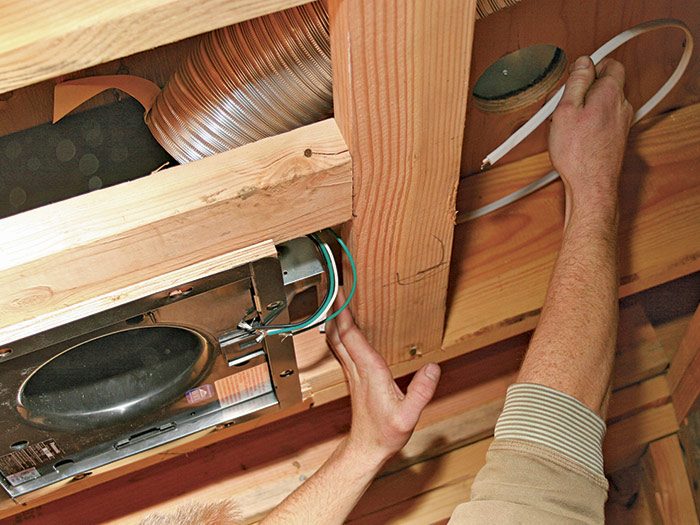
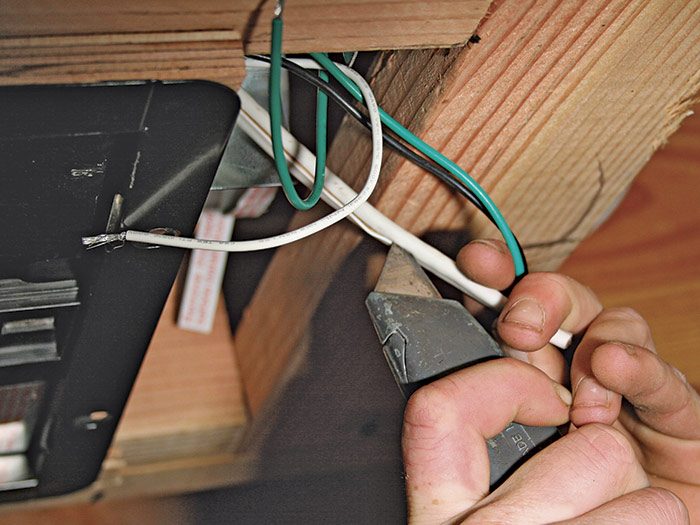
If the epithelial duct space is tight, it's usually best to wire the fan boxful before instalmen the duct. When running cable to the fan box, allow a generous loop-the-loop of transmission line, just just in case. Every bit with light fixtures and receptacles, staple the cable within 1 ft. of the fan loge 1. Cut-in a cable's length connector into a adjunction box knockout, feed the cable through it, and strip the cable sheathing 2.
 |  |
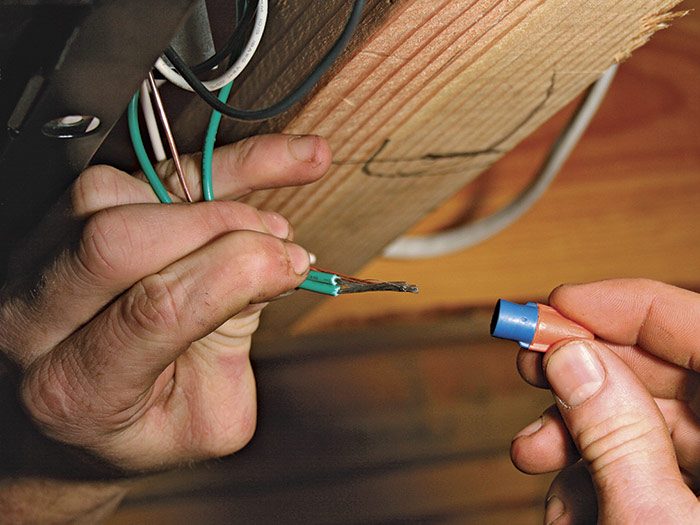
Using wire connectors, first splice the incoming ground telegram to the fixture primer 3. (If the fixedness lead wires are stranded, extend them slimly on the far side the solid telegram so that the wire connector will engage them first.) Splice the neutral wires and then the sexy wires. If the luminosity and fan are wired individually, there will be 2 sets of hot wires.
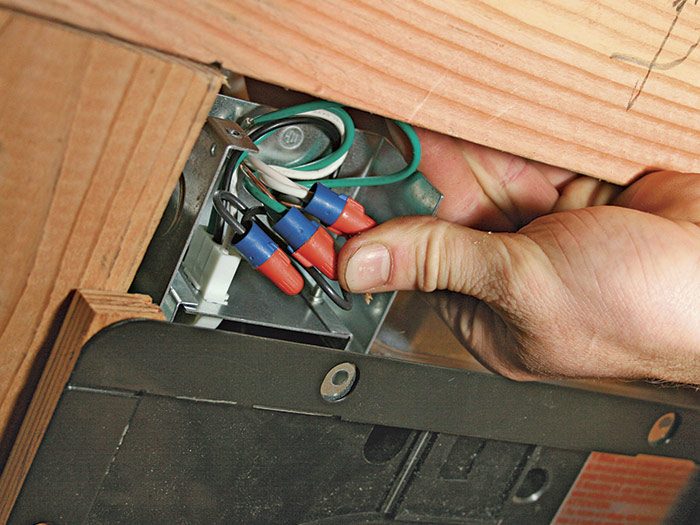
Tug each cable group gently no doubt the splices are shielded. When every last groups are spliced, cautiously fold the wires into the fan junction box and cover the boxful 4.
 |  |

Excerpted from Wiring Consummate, 3rd Edition (The Taunton Jam, 2022) by Michael Litchfield and Michael McAlister
Available in the Taunton Store and at Amazon.com.
How to Install Roof Vent for Bathroom Fan
Source: https://www.finehomebuilding.com/project-guides/wiring/installing-a-bathroom-fan
Post a Comment